Cleaning and disinfection
A cleaning plan the whole team can follow
Turn a cleaning table into clear instructions: area, workstation, timing, responsibility and a way to report problems.
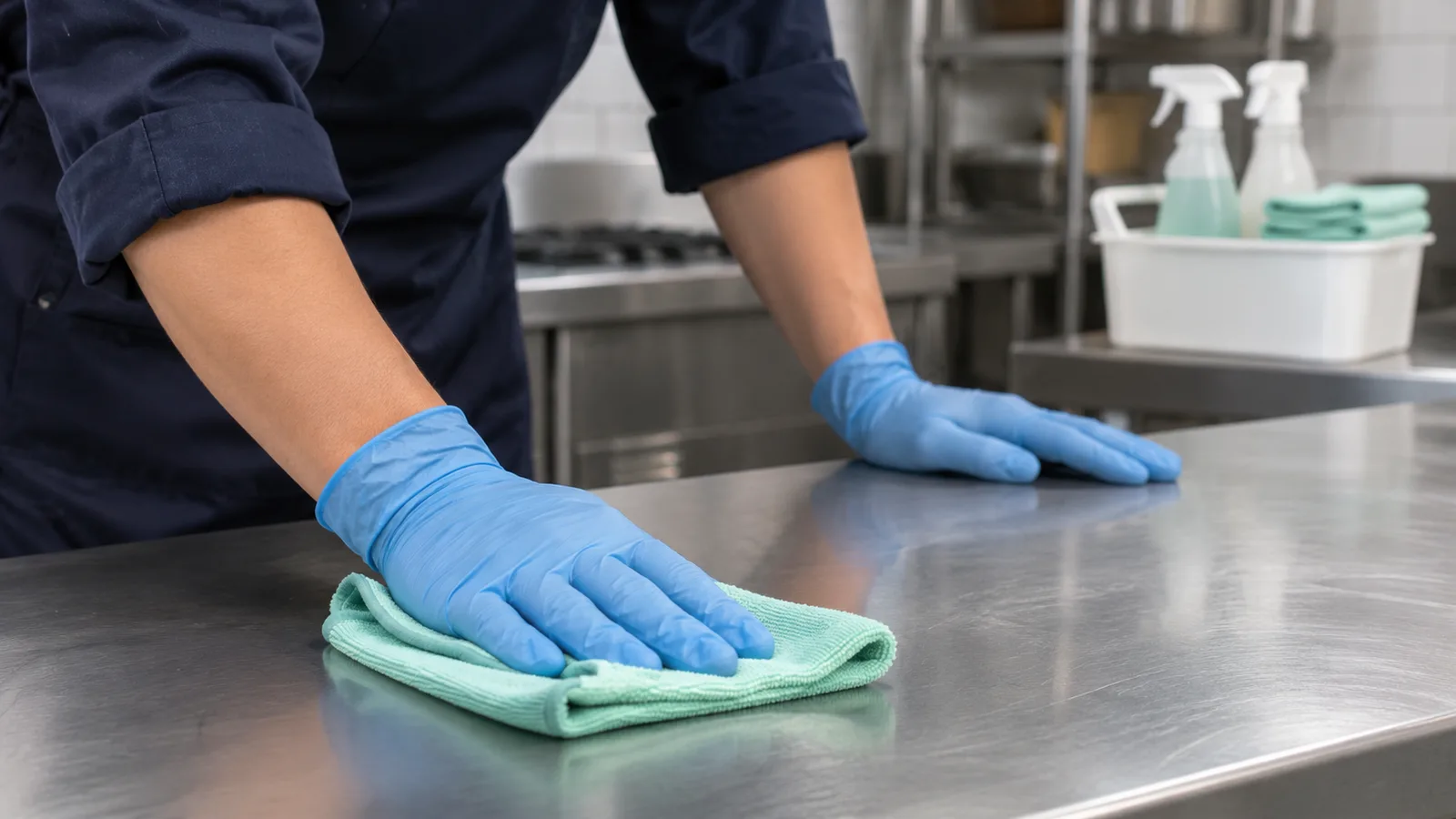
France’s Service Public guidance highlights layouts that support maintenance and separate storage for cleaning products. For day-to-day organisation, here is a suggested method for making instructions easier to follow during service.
Name a workstation rather than an intention
An instruction such as ‘clean the kitchen’ leaves too much room for interpretation. Name an identifiable workstation, such as ‘hood filter — kitchen’, and reference the appropriate procedure. The task says what needs doing; the procedure explains the method, products and precautions.
Choose timing the team understands
Arrange tasks around the establishment’s actual working day: opening, a service change or closing, for example. Assign a role or operator and agree how an absent colleague will be covered.
Frequencies and methods need to fit your activity. Copying another restaurant’s schedule may leave some workstations without follow-up.
Allow for tasks that cannot be completed
A missing product or inaccessible piece of equipment should not disappear behind a ticked box. Provide a simple issue report, a useful note and an owner for follow-up. Keep a record of the solution when it is implemented.
- An identifiable workstation and area
- An accessible instruction or procedure
- A known owner and time
- A reported issue with follow-up
Check that the plan is usable
During a handover, ask a colleague to find their next tasks and the associated procedure. Where instructions lead to different interpretations, simplify the wording before adding more columns.
Reviewing missed tasks can also reveal unsuitable timing or impractical instructions. Adjust the organisation while preserving the completion history.